


Voxel Blast Jam
4.7452.00 Reviews
App Specs
- Version
- 1.5.3
- Updated On
- License
- Free
- Downloads
- 100,000+
- Developer
- Unico Studio
- Categories
- Puzzle
- Platform
- Android
Screenshots

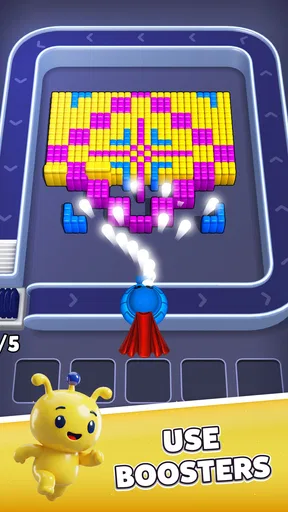
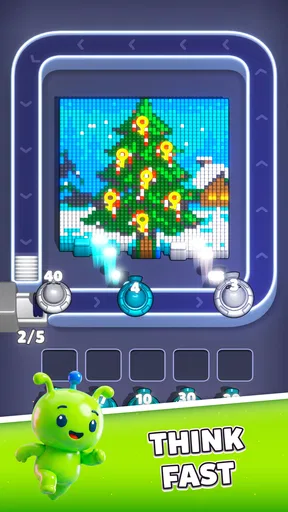
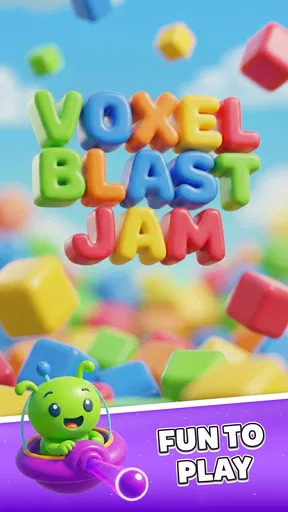
 Analysis by AppCompare
Some puzzle games ask for a quiet room and a long stretch of attention. Voxel Blast Jam takes the opposite approach. I can open it when I have only a few spare minutes, understand the basic goal almost immediately, and start making decisions without first working through a complicated tutorial. That directness is the main reason I kept returning to it.
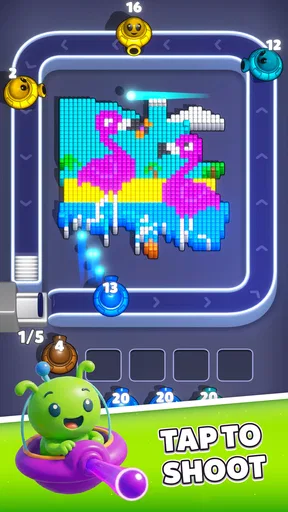
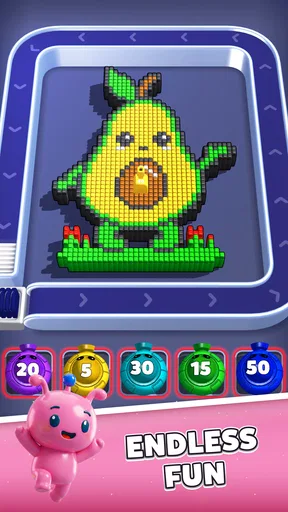
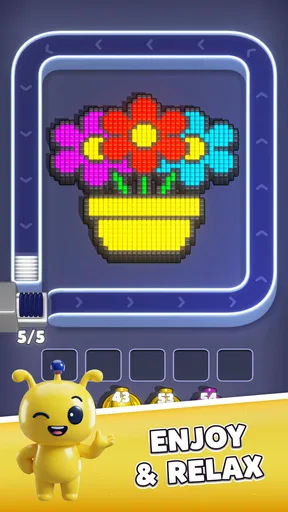
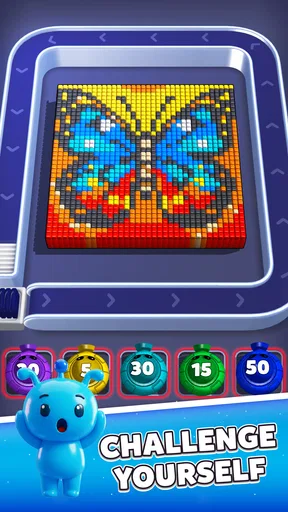
This is a free puzzle game from Unico Studio, built around colorful block arrangements and shooting. Its voxel-style presentation gives the board a playful, toy-like look, while the puzzle structure keeps the focus on where each shot should go next. The store summary describes it as a pixel shooter and block-puzzle color game with no timer, and that last part matters more than it may seem: the absence of a countdown changes the mood from frantic reaction to deliberate planning.
I would not describe it as a deep strategy game or as a replacement for a large match-three adventure. Its appeal is narrower and clearer. It is for the moment when I want a small mental challenge, a little visual feedback, and no pressure to finish a lengthy stage before life interrupts me. That makes it especially suitable for short, uneven play sessions.
How the puzzle feels in a short session
The first useful quality is how quickly the game communicates its purpose. The colored blocks, voxel shapes, and shooting action make the interaction feel more active than a standard tile-matching board, but the underlying pleasure still comes from spotting patterns and choosing an efficient move. I do not need to memorize a large set of rules before I can enjoy a round.
That clarity makes a difference during ordinary moments. I can play while waiting for a kettle to boil, during a short break between tasks, or while sitting somewhere with nothing else demanding my attention. A game with a timer would turn those moments into stressful races. Here, I can look at the arrangement, consider the likely result of a shot, and act when I am ready.
The shooting theme also gives each move a stronger sense of intention than simply tapping a matching group. I am not only clearing color; I am deciding how to direct an action through a compact visual space. Even when the solution is simple, that extra layer makes the board feel more like a small problem to solve than a passive sequence of taps.
My best advice for new players is to resist firing at the first obvious target. The most visible match is not always the most useful one. I found it more satisfying to scan the whole arrangement first, look for a move that opens several possibilities, and only then commit. Because there is no timer pushing me forward, the game gives me room to turn that pause into a habit.
Worth Reading Before You Choose

Switching to Android Auto Means Rethinking Your Driving Routine

Google Calendar Makes a Crowded Week Easier to Manage

Baby Panda World Brings Quick Play to Modern Phones, but Its Game Library Feels Busy

ESPN’s Live Game View Makes Following Close Games Easier

QuizzLand Review: A Good Fit for Short Trivia Breaks, Not Every Player

Basketball Stars: Multiplayer Is Fast, but Can It Recover When Matches Go Wrong?
This is one of the less obvious strengths of the design: the lack of a countdown does not make every decision meaningless. Instead, it shifts the challenge toward reading the board. A player who enjoys quick reflexes may find that less exciting, but anyone who prefers calm spatial choices will probably appreciate the change.
The visual style supports that short-session role well. Voxel graphics are easy to read at a glance, and the colored pieces give the board an immediately recognizable structure. I never felt that the presentation was trying to imitate a serious action game. It is bright, compact, and deliberately casual, which matches the kind of quick entertainment the game provides.
Why the no-timer design changes the mood
Many casual puzzle games create urgency through a ticking clock, limited turns, or a constant stream of new pieces. That can be exciting, but it also makes them difficult to enjoy when I am tired or distracted. Here, the lack of a timer lets me approach a puzzle in a more measured way. I can stop looking at the screen, think about another task, and return to the board without feeling that I have already lost the moment.
There is a trade-off. Without time pressure, the game depends heavily on whether I personally enjoy planning. If I want a burst of reflex-based action, this will feel too gentle. The shooting animation may suggest speed, but the actual experience is closer to a relaxed color-and-block puzzle than to an arcade shooter.
That distinction is important before downloading it. The word “shooter” could attract someone expecting enemies, rapid movement, or traditional action controls. I would set those expectations aside. The shooting is part of the puzzle language, not a substitute for a full action game. Its job is to make clearing patterns feel lively.
What happens when real life interrupts
Voxel Blast Jam is at its most practical when I treat it as an interruption-friendly game. A sudden message, a conversation, or a household task can pull me away from the screen, and a calm puzzle format is much easier to leave than a timed challenge. I do not have to protect a carefully planned streak of rapid inputs just because something came up.
That makes it a good fit for a phone shared with everyday responsibilities. Imagine waiting for a delayed appointment: I can begin a puzzle, make a few considered moves, put the phone down when my name is called, and avoid the feeling that I abandoned a high-pressure run. For me, this is more valuable than a flashy feature because it determines whether I actually use the game repeatedly.
Players should still think about how they normally play. If you prefer games that constantly push you toward the next dramatic event, the slower rhythm may seem flat. The game is designed around small decisions rather than sustained excitement, so its success depends on enjoying the process of arranging, aiming, and clearing.
I also found that the no-timer format encourages a useful two-pass routine. On the first pass, I identify the available colors and likely chain reactions. On the second, I choose the move that leaves the board easiest to understand afterward. This is better than focusing only on the immediate clear, because a spectacular-looking shot can sometimes leave a less convenient arrangement for the next decision.
That approach is particularly helpful when I am playing one-handed or in a noisy environment. I can pause between actions instead of trying to maintain a fast rhythm. It turns the game into something I can fit around my attention rather than something that demands all of it.
Replay value, repetition, and the limits of casual design
The central question for a puzzle game like this is not whether the first few rounds are pleasant. It is whether the basic loop remains enjoyable after the novelty of the voxel presentation fades. In my experience, the replay value comes from trying to make cleaner decisions, finding better clearing sequences, and seeing how efficiently I can handle a board rather than from a large narrative hook.
That can be enough for players who enjoy self-improvement in small doses. I like returning to a familiar type of puzzle when I want something predictable but not completely automatic. The board gives me a compact task, and the shooting mechanic adds just enough personality to keep the action from feeling like a plain color grid.
However, repetition is also the main limitation. If you need a story, a changing world, or a long list of radically different activities, this is unlikely to hold your attention for extended sessions. The game’s identity is concentrated in its block-puzzle and shooting loop. That focus helps it feel clear, but it also means the experience can become routine for players who want constant novelty.
I would compare it with ordinary match-three games in a specific way. Traditional match-three titles often reward rapid scanning and quick combinations, while this game gives more weight to aiming and board reading. Compared with a classic arcade shooter, it is much calmer and more reflective. Compared with a large puzzle adventure, it is easier to pick up but offers less reason to become emotionally invested in a world or story.
That middle position is useful. Someone who finds match-three games too repetitive may enjoy the physical feeling of shooting blocks. Someone who finds action games too demanding may like the absence of a timer. But a player already satisfied by a deep logic puzzler may find the decisions here too light, especially if they are looking for difficult deduction rather than casual pattern management.
One practical way to extend the enjoyment is to give yourself a different objective on each visit. Instead of only asking whether I cleared the board, I might focus on avoiding wasteful shots, preserving a useful color arrangement, or solving the opening section with fewer hesitations. These personal constraints make the same basic loop feel more deliberate without pretending that the game is a competitive strategy title.
The trade-off is that this kind of replay value comes mainly from the player. The game provides the compact puzzle activity, but I supply much of the long-term challenge by changing how carefully I play. That is perfectly acceptable for a casual title, though it means people seeking a strong progression system should consider another category of puzzle game.
Who will enjoy it most
I would recommend it to people who want a free, low-pressure puzzle game that can be understood quickly. It suits players who like colorful boards, small tactical choices, and a shooting gesture without the stress associated with timed play. It is also a sensible choice for anyone who often plays in fragments rather than sitting down for a full, uninterrupted session.
Parents looking for an age-appropriate casual game may also find the presentation approachable. It carries an Everyone content rating, and the playful block aesthetic keeps the tone light. That does not automatically make it ideal for every child, since preferences and attention spans vary, but the overall concept is much closer to family-friendly puzzle play than to intense combat.
I would skip it if my priority were fast reflexes, competitive pressure, or a rich campaign. I would also look elsewhere if I wanted a puzzle game that teaches advanced logic techniques or delivers a highly varied set of mechanics. Voxel Blast Jam works best when I accept its modest scope and judge it by how comfortably it fills a short break.
The game is free to download, which lowers the barrier to trying it. There are optional in-app purchases ranging from $0.99 to $74.99 per item, so I would pay attention to the purchase flow, especially if the phone is used by more than one person. The free entry is appealing, but the presence of optional spending means it is worth keeping normal device purchase controls in place if you want a strictly no-spend experience.
Device expectations and current version
The game supports devices running Android 8.1 or later, so compatibility is not aimed only at the newest phones. I would still judge the experience by the individual device, screen size, and how comfortably the colored blocks can be distinguished. A puzzle based on visual arrangement benefits from a display where small differences are easy to notice.
The current version is 1.5.3. That is useful context for anyone comparing impressions from different periods, because mobile games can change their balance and feel as they are updated. I would install it from the official platform and keep the app current rather than relying on an old package, particularly when the game is being used as a regular short-session habit.
Its audience is already substantial, with over one hundred thousand installs and a 4.7 average from around twelve thousand ratings. Those figures suggest that the straightforward concept is connecting with many players, although popularity does not remove the personal question of whether a calm, repetitive puzzle loop suits you. I see the numbers as reassurance that the basic idea has found an audience, not as a reason to overlook its limited scope.
My final view is positive but specific. Voxel Blast Jam is not trying to be the most complex puzzle game on a phone, and I would not recommend it on that basis. I recommend it because it understands the value of a game that starts quickly, tolerates interruptions, and gives me a small decision to make without demanding a full evening.
The strongest moments come when I slow down, read the colored blocks, and choose a shot that improves the next position rather than merely producing the biggest immediate effect. That simple habit gives the casual loop more substance than the bright presentation alone would provide. If you want relaxed puzzle play with an active visual twist, it is worth trying; if you need constant action or deep progression, choose a different kind of game.
After spending time with it, I see it as a dependable break-time companion rather than a game I would play for hours without stopping. The free starting point, Everyone rating, clear voxel style, and no-timer rhythm make it easy to recommend to the right person. Just approach it for its short-session clarity and modest replay challenge, not for a large adventure or a demanding arcade workout.
Pros
- Simple controls make it easy to start playing immediately.
- Colorful voxel visuals give the game a distinctive look.
- Short levels fit well into quick gaming sessions.
- Puzzle mechanics offer a satisfying sense of progress.
- Playable without needing advanced gaming experience.
Cons
- Some stages may feel repetitive after extended play.
- Difficulty can increase suddenly in later levels.
- Limited variety may reduce long-term replay value.
- Ads may interrupt the gameplay experience.
- Requires patience when solving more complex puzzles.
FAQs for Voxel Blast Jam
What is Voxel Blast Jam and how is the game played?
Voxel Blast Jam is a colorful puzzle game built around matching and clearing voxel-style blocks. During a level, you usually combine matching pieces, create special effects, and remove objectives from the board before running out of moves or time. The presentation is casual and approachable, while later stages introduce more demanding layouts, obstacles, and combinations that require planning instead of simply tapping the most obvious match.
Is Voxel Blast Jam free to download and play?
Voxel Blast Jam can generally be downloaded and started without an upfront purchase, making it easy to try a few levels before deciding whether it suits you. Like many free-to-play puzzle games, it may include optional in-app purchases for boosters, extra lives, currency, or other conveniences. You can normally progress without paying, although patience and careful use of rewards become more important in difficult stages.
Does Voxel Blast Jam require an internet connection?
The basic puzzle experience may be available when your device is offline, which is useful for short sessions while traveling or when mobile data is limited. However, online access can still be needed for advertisements, cloud-related features, events, updates, purchases, or leaderboard content. Availability may vary by version and device, so it is worth testing the game offline after installation rather than assuming every feature will work.
Are there advertisements or in-app purchases in Voxel Blast Jam?
Players should expect that Voxel Blast Jam may use advertisements and optional purchases as part of its free-to-play model. Ads can appear between levels or be offered in exchange for extra rewards, while purchases may provide boosters, additional attempts, or premium currency. These features do not necessarily prevent enjoyment, but users who prefer uninterrupted play should review the available settings and store information before downloading.
Is Voxel Blast Jam suitable for children and casual players?
Voxel Blast Jam is designed to be easy to understand, with bright visuals, simple touch controls, and short levels that work well for casual players. Nevertheless, parents should check the current age rating, advertising content, privacy information, and purchase settings before allowing children to play. Difficulty can increase as the game progresses, so younger players may occasionally need help with strategy or with managing optional purchases.


